
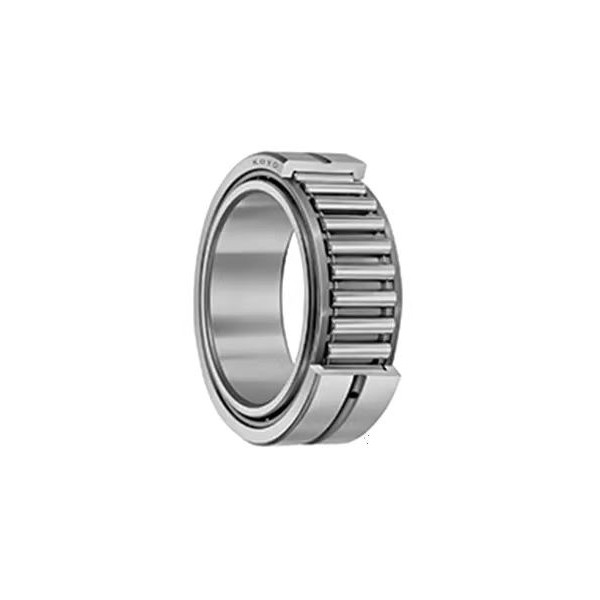

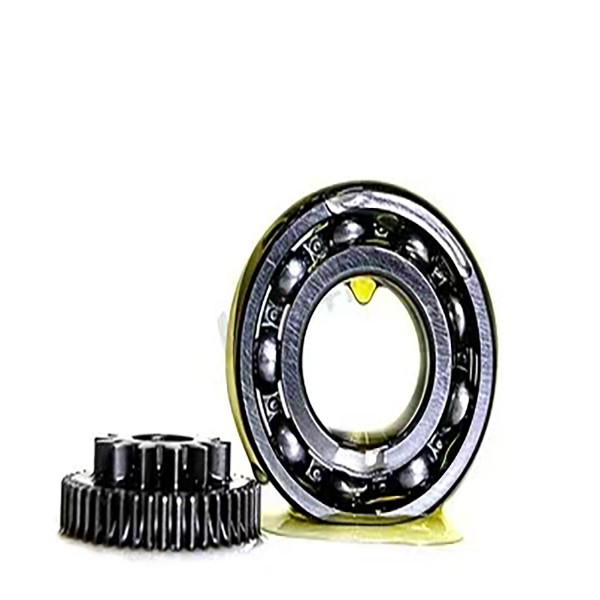
Bearings are consumable parts, and they will definitely be damaged once they are used. It only manifests itself when accumulated to a certain extent, that is, it becomes bad when accumulated to a certain amount. Of course, the damage to rolling bearings is much more complex than that of general mechanical parts. The characteristics of rolling bearing damage are multiple manifestations and complex causes. In addition to the internal factors of bearing design and manufacturing, most of the damage to bearings is caused by improper use, such as improper selection of fabric (see customer instructions), unreasonable support design, improper installation, poor lubrication, poor sealing and other external factors. The following 8 factors are the main causes of bearing failure:
1. Metal corrosion occurs
If lubrication is lacking, it is easily oxidized and rusted by air. To prevent corrosion of the bearings, do not use water bubbles. The bearings are made of stainless steel, but they are also afraid of water. When taking bearings by hand, it is necessary to thoroughly wash off sweat on the hands and apply high-quality mineral oil before operation. Especially during the rainy season and summer, attention should be paid to rust prevention.
The specific reasons for natural corrosion and wear of bearings are mainly as follows: ① Oxidative wear. The tiny peaks and valleys on its frictional surface are squeezed against each other, causing the brittle surface to gradually detach and wear. The small peaks and valleys on the surface of the bearing during relative motion are combined with oxidation in the air to form brittle oxides that are not firmly bonded to the base metal. These oxides are easily detached during friction, and the resulting wear is called oxidative wear. ② Friction generates heat and wear. When bearings work under high-speed heavy loads and poor lubrication, high temperatures, decreased contact point hardness and wear resistance, and even adhesion and tearing phenomena occur at the peaks and valleys of the outer surface due to friction. This type of wear is called frictional heating wear. ③ Hard particle wear. If the bearings are in relative motion. The surface organization of the bearing during motion is uneven, with the presence of hard particles, or impurities such as sand, debris, and chips falling between the moving surfaces of the bearing. In relative motion, hard particles or impurities can cause scratches or even grooves on the surface of the bearing, and this type of wear is called hard particle wear. Automotive bearings ④ pitting wear. Gears, bearings, and other rolling contact surfaces are subjected to significant contact pressure periodically during the process. Over time, the metal surface experiences fatigue, resulting in small cracks and erosion on the bearing surface. This type of wear is called pitting wear. Causing rust or corrosion, wear caused by chemical corrosion. The outer surface of the bearing is corroded by acid, alkali, salt liquids or harmful gases. Accelerated the wear process, which is called wear caused by chemical corrosion.
Corrosion damage caused by temporary contact with liquids or harmful gases such as water, acid, alkali, salt, etc.: Non moving bearings on equipment. Damage caused by rusting or corrosion is called corrosion damage.
2. Excessive bearing load or improper use
When using, do not exceed the load of the bearing. If it's like a car, it may be because the cargo is too heavy, which can easily damage the bearings. So trucks have more problems than cars, which are caused by many parts not being able to withstand them.
3. The bearing clearance is too small
The front wheels of cars use inclined thrust bearings, which require adjusting the clearance. If the clearance is too loose, it can cause abnormal noise, steering deviation, and wheel shaking. Being too tight can accelerate wear and tear, both of which are not good. For old bearings, it is necessary to check whether there are burrs, scratches, and cracks on the surface of the ball (column). Whether the radial clearance and axial clearance of old bearings are qualified, usually only the radial clearance is measured. For new bearings, the first thing to check is whether the bearing model is correct. The radial clearance standard for rolling bearings refers to Table 1. For example, the 6318 deep groove ball bearing has an inner diameter of 90mm and a radial clearance range of 0.016-0.046mm. The maximum wear of the bearing can also be found to be 0.25mm.
4. Use inferior bearings
The production of bearings is carried out by some small factories, and the production process cannot meet the requirements. The accuracy of the shaft or bearing box is poor, and the bearing steel is pressed and produced without treatment, so the bearings produced are not durable.
5. Reckless driving may also lead to damaged car bearings
However, this reason is a bit far fetched. Because if you are not careful while driving, other parts will break down before the bearings.
6. Poor installation
When installing bearings, it is necessary to follow the installation steps of the bearings and avoid rough installation and disassembly. Whether the bearings are installed correctly is related to the service life of the bearings, so everyone must pay attention to it. When installing bearings, avoid holding them directly with your hands, as sweat on your hands may also cause rust. Do not ignore small details. The most important thing during bearing installation is not to allow strong stamping, and not to directly strike the bearing with a hammer. It is not for fear of damage, but for fear of deformation. Once the bearing is deformed, it cannot be used. Also, it is not allowed to transmit pressure through rolling elements.
7. Foreign object intrusion
Try to use specialized tools and avoid using fabrics and short fibers as much as possible to prevent fine fibers from entering the bearing and causing unnecessary damage. For example, when installing bearings, the workers used the copper rod tapping method, which can easily cause uneven axial force on the bearing, resulting in deformation of the cage, damage to the rolling elements, and increased clearance. In addition, during the tapping process, copper powder flies into the bearing cage, which can easily cause bearing failure.
8. Wear caused by high temperature effects
The hardness caused by abnormal high temperature, changes in the metallographic structure or chemical composition of the metal, reduces the wear resistance and hardness of the bearing surface, and accelerates the wear process. This type of wear is called wear caused by high temperature effects. Wear caused by high temperature effects. When the bearing is temporarily working under high temperature conditions.
9. Excessive oil content can cause the rolling elements of the bearing to slip
Excessive oil content in the bearing and box can cause the rolling elements of the bearing to slip, causing the rolling elements to change from rolling friction to sliding friction, damaging the rolling elements of the bearing. Due to excessive oil content in the bearing, the free space inside the bearing box is small, the operating temperature of the bearing will rise, the frequency of the lubricating grease will decrease, the lubricating oil film of the rolling elements will become thinner, the lubrication conditions will be poor, and it is easy to cause bearing abnormal noise, surface slippage, and shorten the life of the bearing. Generally, the motor end cover side is equipped with a bearing oil chamber (except for motors designed with double sealed bearings). According to the motor speed, the oil filling amount in the bearing chamber can be executed according to the following standards: when the motor speed is less than 1500r/min, the oil filling amount is 2/3 of the bearing chamber volume. When the speed is between 1500 and 3000 r/min, it is 1/2 of the bearing chamber volume. When the speed is greater than 3000r/min, it should be less than or equal to one-third of the bearing volume. In practical work, for bearings operating at high temperatures and high speeds, it is advisable to minimize the use of bearings with sealing surfaces, increase the oil storage capacity of the motor oil cover, and install fuel injectors to improve the service life of the motor bearings.