
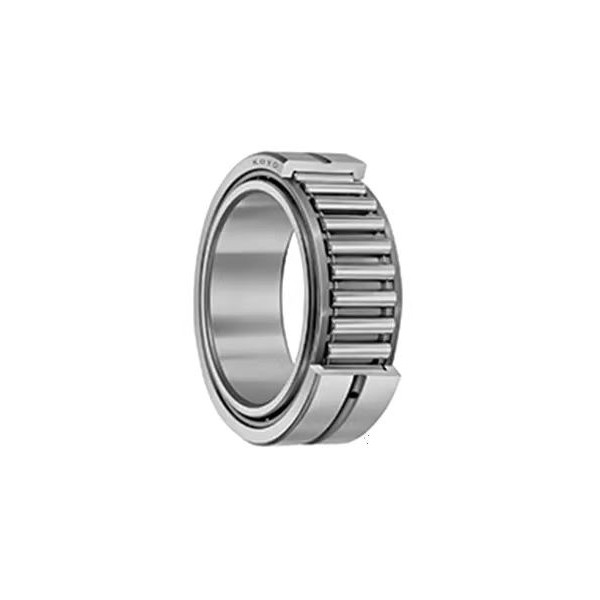

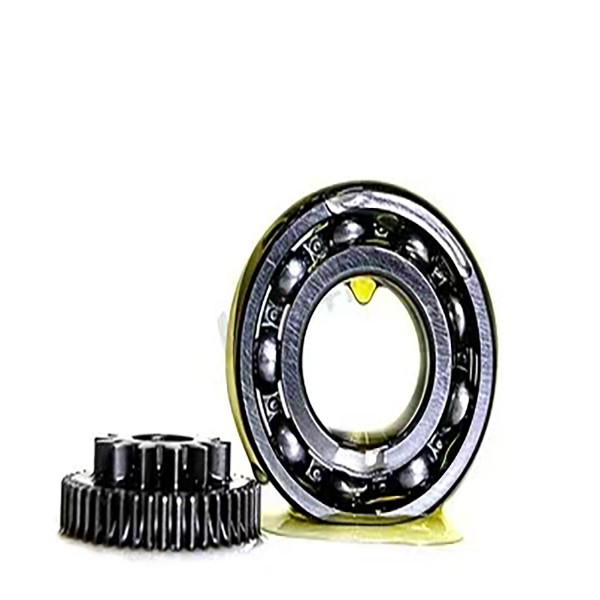
10. For bearings with insulation design on the outer ring, attention should be paid to ensuring that the insulation is intact .
If the bearing insulation is damaged during installation, the thin bearing oil film will be broken down by the shaft voltage. After the oil film is broken down, not only will the lubrication conditions of the rolling elements be poor, but the generated electric sparks will also cause electric corrosion to the rolling elements of the bearing, causing the surface of the rolling elements to become uneven and accelerating the wear of the bearing. Bearing wear can be repaired in this way. The solution is to re-examine the usage conditions or reselect the bearings, observe the clearance and check the machining precision between the shaft and the bearing strip, inspect the design around the bearings, study and check the installation methods and lubricant and lubrication methods.
The repair method/steps for bearing wear can be as follows:
1. Make good preparations in the early stage, such as dismantling equipment, to ensure sufficient construction space and a safe working environment;
2. Preliminary cleaning work on the shaft surface, which involves wiping off the oil stains on the bearing position and positioning surface, removing high points, burrs, rust layers, etc., using 99.7% anhydrous ethanol to clean the bearing position surface, ensuring no dirt, and drying it;
3. Wipe the inner and outer surfaces of the mold clean, and apply a thin layer of SD7000 release agent to the inner surface of the mold, discharge groove, bolts, bolt holes, locating pins, and locating pin holes. The thinner the better, and let it dry for later use;
4. Strictly mix the material SD7101H according to the ratio of 2:1 by volume, mix it thoroughly without color difference, and quickly apply the mixed material to the surface of the bearing position;
5. Quickly install the mold in place, tighten the bolts and install the positioning pins. During the installation of the mold, pay attention to observing the mold to avoid axial movement. At the same time, use a rubber hammer to strike the mold in the circumferential direction during the tightening process to make the material distribution more uniform and avoid deformation of the mold;
6. Material curing: When the ambient temperature is 24 ℃, it is recommended to remove the mold for no less than 4 hours; When the ambient temperature is below 24 ℃, it is recommended to use an iodine tungsten lamp to heat for no less than 3 hours;
7. When dismantling the mold, be cautious to avoid material damage or detachment during the dismantling process. After dismantling the mold, use a saw blade or cutting blade to remove excess material squeezed out of the discharge groove (do not knock or break it by hand), and at the same time polish this area below the overall surface;
8. Assembly of components: When assembling components, it is recommended to apply a thin layer of release agent on the mating surface of the components in advance, and a thin layer of material on the surface of the bearing position.
Strictly follow the assembly process and install quickly. Studying the formation and causes of damage to rolling bearings is of great significance. On the one hand, it can improve the usage methods, correctly use bearings, and fully exert the expected efficiency of bearings. On the other hand, it can help develop new products with better performance. In addition to describing the precautions, installation methods, and operation supervision during the use of rolling bearings, this article also focuses on introducing the forms and causes of bearing damage and the countermeasures that should be taken.
The lifespan of bearings is limited to a certain period of time. If we use them properly and pay attention to the above usage instructions, the bearings will fully play their role.