
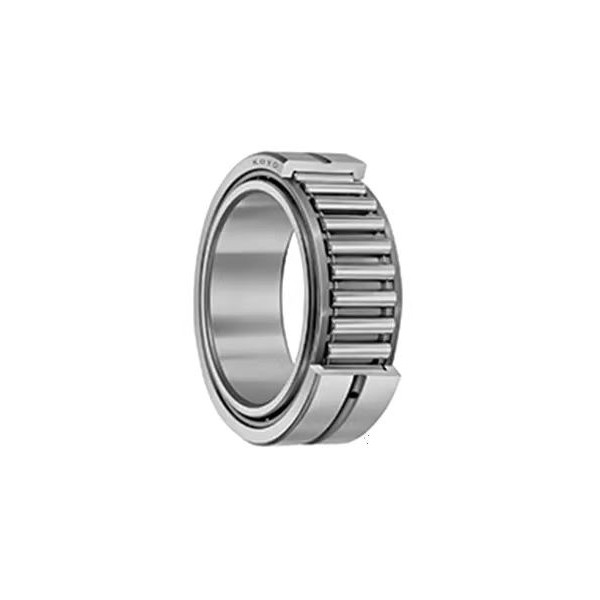

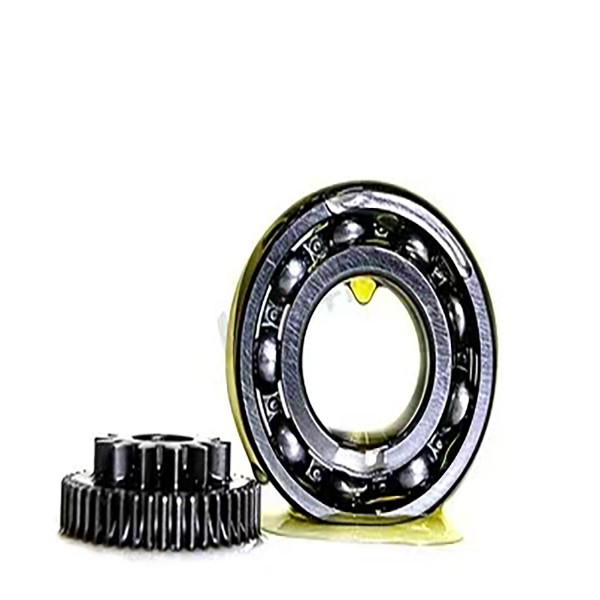
The First: Preparation of bearings
Due to the rust prevention treatment and packaging of the bearings, do not open the packaging before installation.
In addition, the anti rust oil coated on the bearings has good lubrication performance. For general purpose bearings or bearings filled with lubricating grease, they can be used directly without cleaning. But for instrument bearings or bearings used for high-speed rotation, clean cleaning oil should be used to wash away the rust proof oil. At this time, the bearings are prone to rusting and should not be left for a long time.
The Second: Inspection of shaft and shell
Clean the bearings and housing to confirm that there are no scratches or burrs left by mechanical processing. There must be no abrasives (SiC, Al2O3, etc.), molding sand, chips, etc. inside the shell.
Next, check whether the dimensions, shape, and processing quality of the shaft and housing conform to the drawings.
The method of installing bearings depends on the fit, conditions, and structure of the bearings. Generally, due to the rotation of the shaft, the inner ring needs to have an interference fit. Cylindrical bore bearings are often pressed in with a press or hot installed. In the case of a tapered hole, it can be directly installed on the tapered shaft or installed with a sleeve.
When installed on the casing, there is usually more clearance fit and interference fit on the outer ring. It is usually pressed in with a press or there is also a cold shrink fit method for installation after cooling. When using dry ice as a coolant and installing it with cold shrink fit, moisture in the air will condense on the surface of the bearing. So, appropriate rust prevention measures are needed.
The correct installation of bearings affects their lifespan, accuracy, and performance. Therefore, the design and assembly department should conduct thorough research on the installation of bearings. I hope to install according to the homework standards. The items for homework standards are usually as follows:
1. Cleaning bearings and their associated components
2. Check the dimensions and precision machining of bearing related components
3. Install bearings
4. Inspection after installing the bearings
5. Supply lubricant to bearings
The Third: Installation method
The installation of bearings should be determined according to the structure, size, and fitting properties of the bearing components. The pressure should be directly applied to the end face of the tightly fitted ring, and should not be transmitted through the rolling elements. The following methods are generally used for bearing installation:
Installation of thrust bearings
The overall fit between the thrust bearing and the shaft is generally a transitional fit, and the fit between the seat ring and the bearing seat hole is generally a clearance fit. Therefore, this type of bearing is easier to install. The central axis of the bidirectional thrust bearing should be fixed on the shaft to prevent relative rotation. The installation method of bearings is generally based on the rotation of the shaft, so the fit between the inner ring and the shaft is an over win fit, and the fit between the outer ring of the bearing and the bearing chamber is a clearance fit.
Press fit fit
When the inner ring of the bearing is tightly fitted with the shaft, and the outer ring is loosely fitted with the bearing seat hole, a press machine can be used to press the bearing onto the shaft first, and then the shaft and bearing can be installed into the bearing seat hole together. When pressing, a soft metal material assembly sleeve (copper or soft steel) should be placed on the end face of the bearing inner ring. The inner diameter of the assembly sleeve should be slightly larger than the shaft neck diameter, and the outer diameter should be slightly smaller than the inner ring flange of the bearing to avoid pressing on the cage. 2、 Cleaning bearings and related components
For bearings that have already been lubricated with grease and have oil seals or dust covers on both sides, there is no need to clean the sealing ring bearings before installation. Check the dimensions and precision machining of the relevant parts.
The Fourth: Lubricating grease lubrication
It is best to implement re lubrication of bearings during the planned equipment shutdown period and regularly replenish them. At the same time, old grease should be removed or squeezed out through an oil drain. Before adding fresh oil, the oil nozzle should be wiped clean. If the bearing box does not have an oil nozzle, the bearing box cover or end cover should be opened to remove the old grease, clean it, and add fresh grease of the same model.
Regularly check the oil level and quality of the lubricating oil. Generally, the normal oil level should be within the range of 1/3-2/3 of the equipment oil level window or label. The oil replenishment method is the oil cup, and the displayed oil level only represents the replenishment capacity. The oil level in the bearing box meets the operating requirements, and if the oil level in the oil cup is lower than 1/4 of its total volume, replenishment can be considered.
Check and replenish oil methods, take a small amount of lubricating oil as a sample and compare it with fresh lubricating oil. Units with the ability can consider conducting oil quality testing to ensure that the oil quality is qualified. If the sample appears cloudy, it may be the result of mixing with water, which is commonly known as oil emulsification. At this time, the lubricating oil should be replaced.
If the color of the sample becomes darker or thicker, it may indicate that the lubricating oil has started to carbonize, and the old lubricating oil should be thoroughly replaced. If possible, flush the oil circuit with fresh lubricating oil. When replacing lubricating oil, it should be ensured that the new and old models are the same, and the required oil level should be replenished.
Using an oil bath lubrication system, if the oil temperature is below 60 ℃ (140 ° F) and the lubricating oil is not contaminated, it is sufficient to replace the lubricating oil once a year. If the oil temperature is between 60-100 ℃ (140-210 ° F), the lubricating oil needs to be replaced four times a year. If the oil temperature is between 100-120 ℃ (210-250 ° F), the lubricating oil needs to be replaced once a month. If the oil temperature is above 120 ℃ (250 ° F), the lubricating oil needs to be replaced once a week.
Proper installation and maintenance are important factors for the normal operation of bearings, and at the same time, attention must be paid to maintaining the cleanliness of the bearings. Bearings must be protected from contamination by pollutants and moisture, and must be installed and lubricated correctly. In addition, the design of bearing arrangement, the condition of oil seals, the form and replacement cycle of lubricants, and specialized maintenance also play important roles and must be paid attention to.