5792N21
$9.26
$14.25

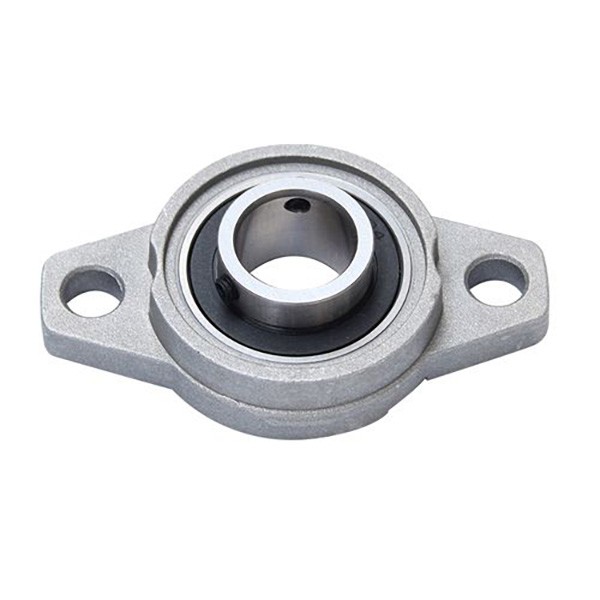
| Mounted Bearing Type | Two-Bolt Flange Mount |
| Bearing Type | Plain |
| Housing Material | Steel |
| Shaft Mount Type | Slip Fit |
| For Shaft Diameter | 5/8" |
| Overall Height | 1 9/16" |
| Overall Length | 2 11/32" |
| Overall Width | 25/32" |
| Bearing Material | Acetal |
| Misalignment Capability | 5° |
| Alignment Style | Self-Aligning |
| For Load Direction | Radial |
| For Shaft Type | Round |
| Product ID | 0.626" |
| ID Tolerance | 0" to 0.002" |
| Lubrication | Not Required |
| Mounting Hole Hole Center to Center | 1 25/32" |
| Mounting Hole Fasteners Included | No |
| Performance | Dry Running |
| System of Measurement | Inch |
| Temperature | -40° F to 180° F |
| Country of Origin | United States |
| DFARS Compliance | Specialty Metals COTS-Exempt |
| ECCN | EAR99 |
| REACH Compliance | REACH (EC 1907/2006) (06/27/2024, 241 SVHC) Compliant |
| RoHS Compliance | RoHS 3 (2015/863/EU) Compliant |
| Schedule B Number | 848330.809 |
| Flange Thickness | 3/32" |
| Mounting Hole Hole Diameter | 7/32" |
| Plain Bearing Type | Sleeve |
| Bearing Width | 43/64" |
| Duty Rating | Light |
| Product Description | With simple, lightweight designs, these bearings are a cost-effective option when extreme precision isn't necessary. Less stable than bearings with forged, one-piece housings, they're good for hand-cranked systems, gravity feed conveyor rollers, and other low-speed applications. Inside, the sleeve is made of naturally slick plastic that doesn't require lubrication. They'll keep shafts spinning with no messy grease to drip off, wash out, or collect dust. With no moving parts, sleeve bearings stand up to grimy environments better than ball bearings. However, with more friction generated, they're less effective at high speeds. The housing mounts in place with a two-bolt flange, the most common type of flanged bearing. Acetal — The most common choice for plastic bearings, acetal is wear-resistant and affordable. Steel Housing — Best for dry environments as moisture will cause them to rust. Misalignment Capability — Bearings compensate for as much shaft misalignment as the degree listed. This extends the life of the bearing and protects against wear if shafts are slightly askew. |
Lorem Ipsum is simply dummy text of the printing and typesetting industry It is a long established fact that a will be distracted by the readable of at
Lorem Ipsum is simply dummy text of the printing and typesetting industry It is a long established fact that a will be distracted by the readable of at
Lorem Ipsum is simply dummy text of the printing and typesetting industry It is a long established fact that a will be distracted by the readable of at
Lorem Ipsum is simply dummy text of the printing and typesetting industry It is a long established fact that a will be distracted by the readable of at
Lorem Ipsum is simply dummy text of the printing and typesetting industry It is a long established fact that a will be distracted by the readable of at
Lorem Ipsum is simply dummy text of the printing and typesetting industry It is a long established fact that a will be distracted by the readable of at
Lorem Ipsum is simply dummy text of the printing and typesetting industry It is a long established fact that a will be distracted by the readable of at
Lorem Ipsum is simply dummy text of the printing and typesetting industry It is a long established fact that a will be distracted by the readable of at