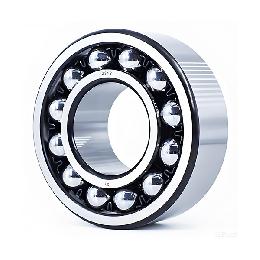
Mount these bearings on tapered shafts. Or, pair with an adapter sleeve to install them on round shafts without needing to press fit. The two rows of balls have separate raceways in the inner ring and a shared raceway in the outer ring, so the balls rock back and forth to compensate for misalignment. This construction also reduces noise and vibration. Open — With no rubber seal to block airflow, these bearings dissipate heat quickly, extending the life of the lubricant and reducing friction over time. Steel — Strong and wear resistant. However, these bearings are best for dry environments since moisture will cause them to rust. ABEC Rating — Bearings with an ABEC rating meet industry tolerance standards established by the Annular Bearing Engineers Committee (ABEC). They're rated on a scale from 1 to 9. The higher the rating, the tighter the tolerance. Bearings rated ABEC 1 or 3 are precise enough for most applications. If your application consistently runs at high speeds or requires high accuracy, consider bearings rated ABEC 5 or higher, since they generate less friction and heat.
Make up for imperfections and gaps between your bearing and shaft for a tight fit. These bearing adapter sleeves are the most common way to mount a bearing with a tapered bore onto a cylindrical seat. They work with both straight and stepped shafts. Secure using the included lock nut.
Mount these bearings on tapered shafts. Or, pair with an adapter sleeve to install them on round shafts without needing to press fit. The two rows of balls have separate raceways in the inner ring and a shared raceway in the outer ring, so the balls rock back and forth to compensate for misalignment. This construction also reduces noise and vibration. Open — With no rubber seal to block airflow, these bearings dissipate heat quickly, extending the life of the lubricant and reducing friction over time. Steel — Strong and wear resistant. However, these bearings are best for dry environments since moisture will cause them to rust. ABEC Rating — Bearings with an ABEC rating meet industry tolerance standards established by the Annular Bearing Engineers Committee (ABEC). They're rated on a scale from 1 to 9. The higher the rating, the tighter the tolerance. Bearings rated ABEC 1 or 3 are precise enough for most applications. If your application consistently runs at high speeds or requires high accuracy, consider bearings rated ABEC 5 or higher, since they generate less friction and heat.
Make up for imperfections and gaps between your bearing and shaft for a tight fit. These bearing adapter sleeves are the most common way to mount a bearing with a tapered bore onto a cylindrical seat. They work with both straight and stepped shafts. Secure using the included lock nut.
Mount these bearings on tapered shafts. Or, pair with an adapter sleeve to install them on round shafts without needing to press fit. The two rows of balls have separate raceways in the inner ring and a shared raceway in the outer ring, so the balls rock back and forth to compensate for misalignment. This construction also reduces noise and vibration. Open — With no rubber seal to block airflow, these bearings dissipate heat quickly, extending the life of the lubricant and reducing friction over time. Steel — Strong and wear resistant. However, these bearings are best for dry environments since moisture will cause them to rust. ABEC Rating — Bearings with an ABEC rating meet industry tolerance standards established by the Annular Bearing Engineers Committee (ABEC). They're rated on a scale from 1 to 9. The higher the rating, the tighter the tolerance. Bearings rated ABEC 1 or 3 are precise enough for most applications. If your application consistently runs at high speeds or requires high accuracy, consider bearings rated ABEC 5 or higher, since they generate less friction and heat.
Make up for imperfections and gaps between your bearing and shaft for a tight fit. These bearing adapter sleeves are the most common way to mount a bearing with a tapered bore onto a cylindrical seat. They work with both straight and stepped shafts. Secure using the included lock nut.
Mount these bearings on tapered shafts. Or, pair with an adapter sleeve to install them on round shafts without needing to press fit. The two rows of balls have separate raceways in the inner ring and a shared raceway in the outer ring, so the balls rock back and forth to compensate for misalignment. This construction also reduces noise and vibration. Open — With no rubber seal to block airflow, these bearings dissipate heat quickly, extending the life of the lubricant and reducing friction over time. Steel — Strong and wear resistant. However, these bearings are best for dry environments since moisture will cause them to rust. ABEC Rating — Bearings with an ABEC rating meet industry tolerance standards established by the Annular Bearing Engineers Committee (ABEC). They're rated on a scale from 1 to 9. The higher the rating, the tighter the tolerance. Bearings rated ABEC 1 or 3 are precise enough for most applications. If your application consistently runs at high speeds or requires high accuracy, consider bearings rated ABEC 5 or higher, since they generate less friction and heat.
Make up for imperfections and gaps between your bearing and shaft for a tight fit. These bearing adapter sleeves are the most common way to mount a bearing with a tapered bore onto a cylindrical seat. They work with both straight and stepped shafts. Secure using the included lock nut.
Mount these bearings on tapered shafts. Or, pair with an adapter sleeve to install them on round shafts without needing to press fit. The two rows of balls have separate raceways in the inner ring and a shared raceway in the outer ring, so the balls rock back and forth to compensate for misalignment. This construction also reduces noise and vibration. Open — With no rubber seal to block airflow, these bearings dissipate heat quickly, extending the life of the lubricant and reducing friction over time. Steel — Strong and wear resistant. However, these bearings are best for dry environments since moisture will cause them to rust. ABEC Rating — Bearings with an ABEC rating meet industry tolerance standards established by the Annular Bearing Engineers Committee (ABEC). They're rated on a scale from 1 to 9. The higher the rating, the tighter the tolerance. Bearings rated ABEC 1 or 3 are precise enough for most applications. If your application consistently runs at high speeds or requires high accuracy, consider bearings rated ABEC 5 or higher, since they generate less friction and heat.
Make up for imperfections and gaps between your bearing and shaft for a tight fit. These bearing adapter sleeves are the most common way to mount a bearing with a tapered bore onto a cylindrical seat. They work with both straight and stepped shafts. Secure using the included lock nut.
Mount these bearings on tapered shafts. Or, pair with an adapter sleeve to install them on round shafts without needing to press fit. The two rows of balls have separate raceways in the inner ring and a shared raceway in the outer ring, so the balls rock back and forth to compensate for misalignment. This construction also reduces noise and vibration. Open — With no rubber seal to block airflow, these bearings dissipate heat quickly, extending the life of the lubricant and reducing friction over time. Steel — Strong and wear resistant. However, these bearings are best for dry environments since moisture will cause them to rust. ABEC Rating — Bearings with an ABEC rating meet industry tolerance standards established by the Annular Bearing Engineers Committee (ABEC). They're rated on a scale from 1 to 9. The higher the rating, the tighter the tolerance. Bearings rated ABEC 1 or 3 are precise enough for most applications. If your application consistently runs at high speeds or requires high accuracy, consider bearings rated ABEC 5 or higher, since they generate less friction and heat.
Make up for imperfections and gaps between your bearing and shaft for a tight fit. These bearing adapter sleeves are the most common way to mount a bearing with a tapered bore onto a cylindrical seat. They work with both straight and stepped shafts. Secure using the included lock nut.
Mount these bearings on tapered shafts. Or, pair with an adapter sleeve to install them on round shafts without needing to press fit. The two rows of balls have separate raceways in the inner ring and a shared raceway in the outer ring, so the balls rock back and forth to compensate for misalignment. This construction also reduces noise and vibration. Open — With no rubber seal to block airflow, these bearings dissipate heat quickly, extending the life of the lubricant and reducing friction over time. Steel — Strong and wear resistant. However, these bearings are best for dry environments since moisture will cause them to rust. ABEC Rating — Bearings with an ABEC rating meet industry tolerance standards established by the Annular Bearing Engineers Committee (ABEC). They're rated on a scale from 1 to 9. The higher the rating, the tighter the tolerance. Bearings rated ABEC 1 or 3 are precise enough for most applications. If your application consistently runs at high speeds or requires high accuracy, consider bearings rated ABEC 5 or higher, since they generate less friction and heat.
Make up for imperfections and gaps between your bearing and shaft for a tight fit. These bearing adapter sleeves are the most common way to mount a bearing with a tapered bore onto a cylindrical seat. They work with both straight and stepped shafts. Secure using the included lock nut.
Mount these bearings on tapered shafts. Or, pair with an adapter sleeve to install them on round shafts without needing to press fit. The two rows of balls have separate raceways in the inner ring and a shared raceway in the outer ring, so the balls rock back and forth to compensate for misalignment. This construction also reduces noise and vibration. Open — With no rubber seal to block airflow, these bearings dissipate heat quickly, extending the life of the lubricant and reducing friction over time. Steel — Strong and wear resistant. However, these bearings are best for dry environments since moisture will cause them to rust. ABEC Rating — Bearings with an ABEC rating meet industry tolerance standards established by the Annular Bearing Engineers Committee (ABEC). They're rated on a scale from 1 to 9. The higher the rating, the tighter the tolerance. Bearings rated ABEC 1 or 3 are precise enough for most applications. If your application consistently runs at high speeds or requires high accuracy, consider bearings rated ABEC 5 or higher, since they generate less friction and heat.
Make up for imperfections and gaps between your bearing and shaft for a tight fit. These bearing adapter sleeves are the most common way to mount a bearing with a tapered bore onto a cylindrical seat. They work with both straight and stepped shafts. Secure using the included lock nut.
Mount these bearings on tapered shafts. Or, pair with an adapter sleeve to install them on round shafts without needing to press fit. The two rows of balls have separate raceways in the inner ring and a shared raceway in the outer ring, so the balls rock back and forth to compensate for misalignment. This construction also reduces noise and vibration. Open — With no rubber seal to block airflow, these bearings dissipate heat quickly, extending the life of the lubricant and reducing friction over time. Steel — Strong and wear resistant. However, these bearings are best for dry environments since moisture will cause them to rust. ABEC Rating — Bearings with an ABEC rating meet industry tolerance standards established by the Annular Bearing Engineers Committee (ABEC). They're rated on a scale from 1 to 9. The higher the rating, the tighter the tolerance. Bearings rated ABEC 1 or 3 are precise enough for most applications. If your application consistently runs at high speeds or requires high accuracy, consider bearings rated ABEC 5 or higher, since they generate less friction and heat.
Make up for imperfections and gaps between your bearing and shaft for a tight fit. These bearing adapter sleeves are the most common way to mount a bearing with a tapered bore onto a cylindrical seat. They work with both straight and stepped shafts. Secure using the included lock nut.