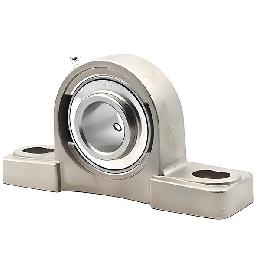
With a two-piece housing made from thin pressed metal, these bearings are a cost-effective option when extreme precision isn't necessary. Less stable than bearings with forged, one-piece housings, they're good for hand-cranked systems, gravity feed conveyor rollers, and other low-speed applications. Made from porous, oil-saturated bronze, they release their own lubrication on startup, reducing the need for frequent relubrication. With no moving parts, sleeve bearings stand up to dusty, dirty environments better than ball or roller bearings. However, with more friction generated, they're less effective at high speeds. Steel Housing — Best for dry environments as moisture will cause them to rust. Misalignment Capability — Bearings compensate for as much shaft misalignment as the degree listed. This extends the life of the bearing and protects against wear if shafts are slightly askew.