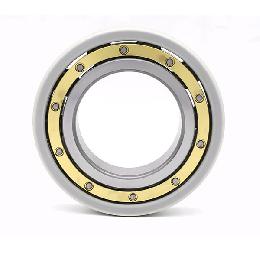
Protect bearings from stray currents. The ceramic balls insulate bearings from electrical charges in electric motors and power generators that can damage the inner ring over time. The balls also generate less heat than metal ones, so you don’t have to lubricate them as often to keep bearings running smoothly. Sealed — The best choice for dirty environments. A barrier seals out dust so it won't gunk up or wear down the balls. However, these bearings retain the most heat since air can't flow through. Steel — Strong and wear resistant. However, these bearings are best for dry environments since moisture will cause them to rust. ABEC Rating — Bearings with an ABEC rating meet industry tolerance standards established by the Annular Bearing Engineers Committee (ABEC). They're rated on a scale from 1 to 9. The higher the rating, the tighter the tolerance. Bearings rated ABEC 1 or 3 are precise enough for most applications. If your application consistently runs at high speeds or requires high accuracy, consider bearings rated ABEC 5 or higher, since they generate less friction and heat.
Protect bearings from stray currents. The ceramic balls insulate bearings from electrical charges in electric motors and power generators that can damage the inner ring over time. The balls also generate less heat than metal ones, so you don’t have to lubricate them as often to keep bearings running smoothly. Shielded — The balls are covered just enough to keep out large particles while allowing air to pass through and dissipate heat. Steel — Strong and wear resistant. However, these bearings are best for dry environments since moisture will cause them to rust. ABEC Rating — Bearings with an ABEC rating meet industry tolerance standards established by the Annular Bearing Engineers Committee (ABEC). They're rated on a scale from 1 to 9. The higher the rating, the tighter the tolerance. Bearings rated ABEC 1 or 3 are precise enough for most applications. If your application consistently runs at high speeds or requires high accuracy, consider bearings rated ABEC 5 or higher, since they generate less friction and heat.