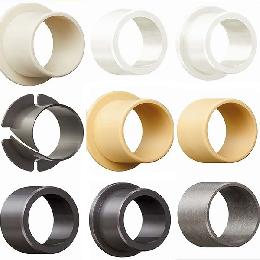
A gap running along the length of these bearings allows you to quickly squeeze them into a housing— no tools required. Made of naturally slippery plastic, there’s no need to add messy oil that could drip and attract dust. Flanged sleeve bearings combine a sleeve and thrust bearing in one. The flange supports thrust loads and prevents the bearing from being pushed out of place. The sleeve is the simplest way to support the load of a rotating shaft while reducing friction. Also known as plain bearings. Nylon — The most popular choice, nylon is wear resistant yet economical. Keep in mind, though, that it will swell and weaken when exposed to moisture.