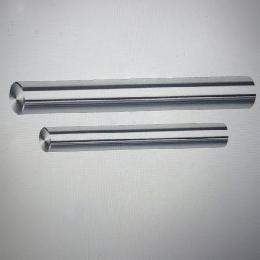
Combine these general purpose drive shafts with gears, sprockets, and bearings to transmit rotary motion. All are turned, precision ground, and polished to meet tight diameter and straightness tolerances. This means these shafts evenly distribute loads, reduce vibration, and improve accuracy and stability. Steel shafts are generally stronger than stainless steel shafts but not as corrosion resistant. Alloy steel shafts are good for high-stress applications. They are stronger than carbon steel and hardened for increased wear resistance; however, they are more difficult to machine. Shafts with chamfered edges reduce damage to bearings, housings, and other components during installation.
Combine these general purpose drive shafts with gears, sprockets, and bearings to transmit rotary motion. All are turned, precision ground, and polished to meet tight diameter and straightness tolerances. This means these shafts evenly distribute loads, reduce vibration, and improve accuracy and stability. Stainless steel shafts are more corrosion resistant than steel shafts but more difficult to machine. 303 stainless steel shafts have good corrosion resistance and are easier to machine than other types of stainless steel. Shafts with chamfered edges reduce damage to bearings, housings, and other components during installation.