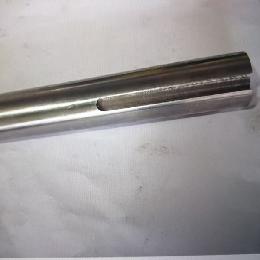
These shafts have keyways only on the ends, leaving a plain shaft in the center. The keyways work with the included ANSI machine keys to transmit torque to gears, sprockets, and other keyed components. Use the middle of the shaft with bearings and other round-bore components. The edges are chamfered to remove sharp corners, reducing damage to bearings, housings, and other components during installation. All are turned, ground, and polished to meet tight diameter and straightness tolerances. 303 stainless steel shafts are more corrosion resistant than 1045 carbon steel shafts but also more difficult to machine.