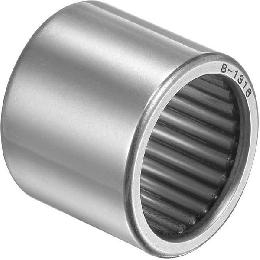
Also known as drawn-cup roller bearings, these are our thinnest roller bearings. The outer ring is drawn out to form a lip that holds the bearing together. Bearings take on the shape of their housing and may be oblong prior to installation. Sealed Bearing — Sealed bearings block out dust and other contaminants better than open bearings, but retain more heat.