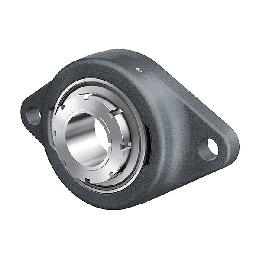
Slim but sturdy, needle roller bearings have a thinner profile than ball bearings. They're better than other roller bearings at handling light loads at high speeds. The solid housing supports the shaft and secures with a two-bolt flange, the most common type of flanged bearing. Lubricate your bearings regularly to keep them in tip-top shape. These bearings are not sealed, which may attract dust and debris in the grease. Steel Housing — Best for dry environments as moisture will cause them to rust. Press Fit — Mount directly onto a hardened and ground shaft. Misalignment Capability — Bearings compensate for as much shaft misalignment as the degree listed. This extends the life of the bearing and protects against wear if shafts are slightly askew.
Slim but sturdy, needle roller bearings have a thinner profile than ball bearings. They're better than other roller bearings at handling light loads at high speeds. The solid housing supports the shaft and secures with a two-bolt flange, the most common type of flanged bearing. Lubricate your bearings regularly to keep them in tip-top shape. These bearings are not sealed, which may attract dust and debris in the grease. Steel Housing — Best for dry environments as moisture will cause them to rust. Press Fit — Mount directly onto a hardened and ground shaft.
Slim but sturdy, needle roller bearings have a thinner profile than ball bearings. They're better than other roller bearings at handling light loads at high speeds. The solid housing supports the shaft and secures with a two-bolt flange, the most common type of flanged bearing. Lubricate your bearings regularly to keep them in tip-top shape. These bearings are not sealed, which may attract dust and debris in the grease. Steel Housing — Best for dry environments as moisture will cause them to rust. Press Fit — Mount directly onto a hardened and ground shaft. Misalignment Capability — Bearings compensate for as much shaft misalignment as the degree listed. This extends the life of the bearing and protects against wear if shafts are slightly askew.
Slim but sturdy, needle roller bearings have a thinner profile than ball bearings. They're better than other roller bearings at handling light loads at high speeds. The solid housing supports the shaft and secures with a two-bolt flange, the most common type of flanged bearing. Lubricate your bearings regularly to keep them in tip-top shape. These bearings are not sealed, which may attract dust and debris in the grease. Steel Housing — Best for dry environments as moisture will cause them to rust. Press Fit — Mount directly onto a hardened and ground shaft.
Slim but sturdy, needle roller bearings have a thinner profile than ball bearings. They're better than other roller bearings at handling light loads at high speeds. The solid housing supports the shaft and secures with a two-bolt flange, the most common type of flanged bearing. Lubricate your bearings regularly to keep them in tip-top shape. These bearings are not sealed, which may attract dust and debris in the grease. Steel Housing — Best for dry environments as moisture will cause them to rust. Press Fit — Mount directly onto a hardened and ground shaft. Misalignment Capability — Bearings compensate for as much shaft misalignment as the degree listed. This extends the life of the bearing and protects against wear if shafts are slightly askew.
Slim but sturdy, needle roller bearings have a thinner profile than ball bearings. They're better than other roller bearings at handling light loads at high speeds. The solid housing supports the shaft and secures with a two-bolt flange, the most common type of flanged bearing. Lubricate your bearings regularly to keep them in tip-top shape. These bearings are not sealed, which may attract dust and debris in the grease. Steel Housing — Best for dry environments as moisture will cause them to rust. Press Fit — Mount directly onto a hardened and ground shaft.
Slim but sturdy, needle roller bearings have a thinner profile than ball bearings. They're better than other roller bearings at handling light loads at high speeds. The solid housing supports the shaft and secures with a two-bolt flange, the most common type of flanged bearing. Lubricate your bearings regularly to keep them in tip-top shape. These bearings are not sealed, which may attract dust and debris in the grease. Steel Housing — Best for dry environments as moisture will cause them to rust. Press Fit — Mount directly onto a hardened and ground shaft. Misalignment Capability — Bearings compensate for as much shaft misalignment as the degree listed. This extends the life of the bearing and protects against wear if shafts are slightly askew.
Slim but sturdy, needle roller bearings have a thinner profile than ball bearings. They're better than other roller bearings at handling light loads at high speeds. The solid housing supports the shaft and secures with a two-bolt flange, the most common type of flanged bearing. Lubricate your bearings regularly to keep them in tip-top shape. These bearings are not sealed, which may attract dust and debris in the grease. Steel Housing — Best for dry environments as moisture will cause them to rust. Press Fit — Mount directly onto a hardened and ground shaft.
Slim but sturdy, needle roller bearings have a thinner profile than ball bearings. They're better than other roller bearings at handling light loads at high speeds. The solid housing supports the shaft and secures with a two-bolt flange, the most common type of flanged bearing. Lubricate your bearings regularly to keep them in tip-top shape. These bearings are not sealed, which may attract dust and debris in the grease. Steel Housing — Best for dry environments as moisture will cause them to rust. Press Fit — Mount directly onto a hardened and ground shaft. Misalignment Capability — Bearings compensate for as much shaft misalignment as the degree listed. This extends the life of the bearing and protects against wear if shafts are slightly askew.
Slim but sturdy, needle roller bearings have a thinner profile than ball bearings. They're better than other roller bearings at handling light loads at high speeds. The solid housing supports the shaft and secures with a two-bolt flange, the most common type of flanged bearing. Lubricate your bearings regularly to keep them in tip-top shape. These bearings are not sealed, which may attract dust and debris in the grease. Steel Housing — Best for dry environments as moisture will cause them to rust. Press Fit — Mount directly onto a hardened and ground shaft.
Slim but sturdy, needle roller bearings have a thinner profile than ball bearings. They're better than other roller bearings at handling light loads at high speeds. The solid housing supports the shaft and secures with a two-bolt flange, the most common type of flanged bearing. Lubricate your bearings regularly to keep them in tip-top shape. These bearings are not sealed, which may attract dust and debris in the grease. Steel Housing — Best for dry environments as moisture will cause them to rust. Press Fit — Mount directly onto a hardened and ground shaft. Misalignment Capability — Bearings compensate for as much shaft misalignment as the degree listed. This extends the life of the bearing and protects against wear if shafts are slightly askew.
Slim but sturdy, needle roller bearings have a thinner profile than ball bearings. They're better than other roller bearings at handling light loads at high speeds. The solid housing supports the shaft and secures with a two-bolt flange, the most common type of flanged bearing. Lubricate your bearings regularly to keep them in tip-top shape. These bearings are not sealed, which may attract dust and debris in the grease. Steel Housing — Best for dry environments as moisture will cause them to rust. Press Fit — Mount directly onto a hardened and ground shaft.
Slim but sturdy, needle roller bearings have a thinner profile than ball bearings. They're better than other roller bearings at handling light loads at high speeds. The solid housing supports the shaft and secures with a two-bolt flange, the most common type of flanged bearing. Lubricate your bearings regularly to keep them in tip-top shape. These bearings are not sealed, which may attract dust and debris in the grease. Steel Housing — Best for dry environments as moisture will cause them to rust. Press Fit — Mount directly onto a hardened and ground shaft. Misalignment Capability — Bearings compensate for as much shaft misalignment as the degree listed. This extends the life of the bearing and protects against wear if shafts are slightly askew.
Slim but sturdy, needle roller bearings have a thinner profile than ball bearings. They're better than other roller bearings at handling light loads at high speeds. The solid housing supports the shaft and secures with a two-bolt flange, the most common type of flanged bearing. Lubricate your bearings regularly to keep them in tip-top shape. These bearings are not sealed, which may attract dust and debris in the grease. Steel Housing — Best for dry environments as moisture will cause them to rust. Press Fit — Mount directly onto a hardened and ground shaft.
Slim but sturdy, needle roller bearings have a thinner profile than ball bearings. They're better than other roller bearings at handling light loads at high speeds. The solid housing supports the shaft and secures with a two-bolt flange, the most common type of flanged bearing. Lubricate your bearings regularly to keep them in tip-top shape. These bearings are not sealed, which may attract dust and debris in the grease. Steel Housing — Best for dry environments as moisture will cause them to rust. Press Fit — Mount directly onto a hardened and ground shaft. Misalignment Capability — Bearings compensate for as much shaft misalignment as the degree listed. This extends the life of the bearing and protects against wear if shafts are slightly askew.
Slim but sturdy, needle roller bearings have a thinner profile than ball bearings. They're better than other roller bearings at handling light loads at high speeds. The solid housing supports the shaft and secures with a two-bolt flange, the most common type of flanged bearing. Lubricate your bearings regularly to keep them in tip-top shape. These bearings are not sealed, which may attract dust and debris in the grease. Steel Housing — Best for dry environments as moisture will cause them to rust. Press Fit — Mount directly onto a hardened and ground shaft.
Slim but sturdy, needle roller bearings have a thinner profile than ball bearings. They're better than other roller bearings at handling light loads at high speeds. The solid housing supports the shaft and secures with a two-bolt flange, the most common type of flanged bearing. Lubricate your bearings regularly to keep them in tip-top shape. These bearings are not sealed, which may attract dust and debris in the grease. Steel Housing — Best for dry environments as moisture will cause them to rust. Press Fit — Mount directly onto a hardened and ground shaft. Misalignment Capability — Bearings compensate for as much shaft misalignment as the degree listed. This extends the life of the bearing and protects against wear if shafts are slightly askew.
Slim but sturdy, needle roller bearings have a thinner profile than ball bearings. They're better than other roller bearings at handling light loads at high speeds. The solid housing supports the shaft and secures with a two-bolt flange, the most common type of flanged bearing. Lubricate your bearings regularly to keep them in tip-top shape. These bearings are not sealed, which may attract dust and debris in the grease. Steel Housing — Best for dry environments as moisture will cause them to rust. Press Fit — Mount directly onto a hardened and ground shaft.
Slim but sturdy, needle roller bearings have a thinner profile than ball bearings. They're better than other roller bearings at handling light loads at high speeds. The solid housing supports the shaft and secures with a two-bolt flange, the most common type of flanged bearing. Lubricate your bearings regularly to keep them in tip-top shape. These bearings are not sealed, which may attract dust and debris in the grease. Steel Housing — Best for dry environments as moisture will cause them to rust. Press Fit — Mount directly onto a hardened and ground shaft. Misalignment Capability — Bearings compensate for as much shaft misalignment as the degree listed. This extends the life of the bearing and protects against wear if shafts are slightly askew.
Slim but sturdy, needle roller bearings have a thinner profile than ball bearings. They're better than other roller bearings at handling light loads at high speeds. The solid housing supports the shaft and secures with a two-bolt flange, the most common type of flanged bearing. Lubricate your bearings regularly to keep them in tip-top shape. These bearings are not sealed, which may attract dust and debris in the grease. Steel Housing — Best for dry environments as moisture will cause them to rust. Press Fit — Mount directly onto a hardened and ground shaft.
Slim but sturdy, needle roller bearings have a thinner profile than ball bearings. They're better than other roller bearings at handling light loads at high speeds. The solid housing supports the shaft and secures with a two-bolt flange, the most common type of flanged bearing. Lubricate your bearings regularly to keep them in tip-top shape. These bearings are not sealed, which may attract dust and debris in the grease. Steel Housing — Best for dry environments as moisture will cause them to rust. Press Fit — Mount directly onto a hardened and ground shaft. Misalignment Capability — Bearings compensate for as much shaft misalignment as the degree listed. This extends the life of the bearing and protects against wear if shafts are slightly askew.
Slim but sturdy, needle roller bearings have a thinner profile than ball bearings. They're better than other roller bearings at handling light loads at high speeds. The solid housing supports the shaft and secures with a two-bolt flange, the most common type of flanged bearing. Lubricate your bearings regularly to keep them in tip-top shape. These bearings are not sealed, which may attract dust and debris in the grease. Steel Housing — Best for dry environments as moisture will cause them to rust. Press Fit — Mount directly onto a hardened and ground shaft.
Slim but sturdy, needle roller bearings have a thinner profile than ball bearings. They're better than other roller bearings at handling light loads at high speeds. The solid housing supports the shaft and secures with a two-bolt flange, the most common type of flanged bearing. Lubricate your bearings regularly to keep them in tip-top shape. These bearings are not sealed, which may attract dust and debris in the grease. Steel Housing — Best for dry environments as moisture will cause them to rust. Press Fit — Mount directly onto a hardened and ground shaft. Misalignment Capability — Bearings compensate for as much shaft misalignment as the degree listed. This extends the life of the bearing and protects against wear if shafts are slightly askew.
Slim but sturdy, needle roller bearings have a thinner profile than ball bearings. They're better than other roller bearings at handling light loads at high speeds. The solid housing supports the shaft and secures with a two-bolt flange, the most common type of flanged bearing. Lubricate your bearings regularly to keep them in tip-top shape. These bearings are not sealed, which may attract dust and debris in the grease. Steel Housing — Best for dry environments as moisture will cause them to rust. Press Fit — Mount directly onto a hardened and ground shaft.