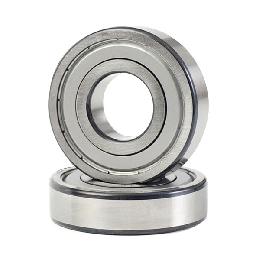
Install and forget these self-lubricating bearings. Their lubricant is a solid material that fills the space between the balls and releases oil over time, so you'll never need to add more. Sealed — The best choice for dirty environments. A barrier seals out dust so it won't gunk up or wear down the balls. However, these bearings retain the most heat since air can't flow through. Steel — Strong and wear resistant. However, these bearings are best for dry environments since moisture will cause them to rust. ABEC Rating — Bearings with an ABEC rating meet industry tolerance standards established by the Annular Bearing Engineers Committee (ABEC). They're rated on a scale from 1 to 9. The higher the rating, the tighter the tolerance. Bearings rated ABEC 1 or 3 are precise enough for most applications. If your application consistently runs at high speeds or requires high accuracy, consider bearings rated ABEC 5 or higher, since they generate less friction and heat.