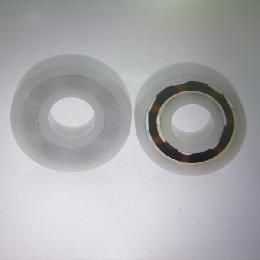
Made of naturally slippery plastic so there's no lubricant to maintain or make a mess. These bearings are ideal for spic-and-span spaces since oil won't drip off, wash out, or collect dust over time. They won't rust or warp from moisture, so they stand up to thorough cleanings. Open — With no rubber seal to block airflow, these bearings dissipate heat quickly, reducing wear and extending the life of the bearing. Acetal — The most common choice for plastic bearings, acetal is economical yet still stands up to daily wear and tear. 316 Stainless Steel Balls — Won't corrode from salt water or harsh chemicals, such as bleach and chlorine found in cleaning solutions.
Made of naturally slippery plastic so there's no lubricant to maintain or make a mess. These bearings are ideal for spic-and-span spaces since oil won't drip off, wash out, or collect dust over time. They won't rust or warp from moisture, so they stand up to thorough cleanings. Open — With no rubber seal to block airflow, these bearings dissipate heat quickly, reducing wear and extending the life of the bearing. Acetal — The most common choice for plastic bearings, acetal is economical yet still stands up to daily wear and tear. Glass Balls — Nonmagnetic, so they won't interfere with sensors and other sensitive electronics.